
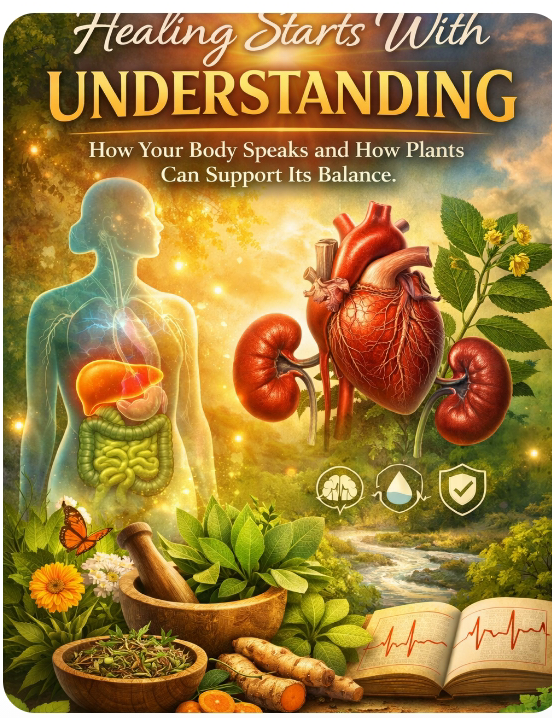
Healing Starts With Understanding: How Your Body Speaks and How Plants Can Support Its Balance
Healing starts with understanding the subtle signals your body sends every day. Even when you eat well, rest adequately, or maintain a healthy lifestyle, you may notice unexplained fatigue, digestive discomfort, skin changes, or mood swings. These sensations are not random; they are messages from your body guiding you toward balance. Every ache, twinge, or flare-up is a clue that an organ or system needs attention. Learning to recognize these messages is the first step toward true wellness. It is not about instant relief or chasing quick fixes — it is about awareness, reflection, and informed choices.
The human body functions as an interconnected system. Your liver, kidneys, gut, heart, hormonal glands, nerves, and immune system continuously communicate. When one organ struggles, others often feel the impact. Understanding these connections allows you to respond wisely, maintain harmony, and nurture your internal balance with insight and care.
In this article, we explore how organ awareness, herbal knowledge, and lifestyle habits come together to empower your wellness journey. Are you ready to hear what your body is truly saying?
Why Do Symptoms Appear in the First Place?
Have you ever experienced a sudden headache, skin irritation, or digestive discomfort and wondered, “Why now?” The answer lies within your organs. Every symptom is a signal — a whisper that something within your system may need attention.
- Could your headache be linked to circulation stress or dehydration?
- Might your digestive upset hint at liver or gut imbalance?
- Are mood fluctuations related to hormonal shifts influenced by organ function?
Healing starts with understanding these connections. Symptoms stop being enemies and start being messages guiding you toward better care, informed choices, and sustainable wellness.
How Do Organs Work Together?
The human body is not a collection of isolated parts. It is an intricate network where organs communicate constantly. Here’s a brief overview of key roles:
- Liver: Processes nutrients, supports digestion, and neutralizes internal waste
- Kidneys: Filter fluids and regulate mineral balance
- Gut: Absorbs nutrients, supports immunity, and hosts beneficial bacteria
- Heart & Vessels: Circulate oxygen and nourishment
- Hormonal Glands: Regulate growth, metabolism, and mood
- Immune System: Protects against internal stress and foreign invaders
When these systems work harmoniously, life feels smoother: energy stabilizes, digestion improves, skin looks radiant, and stress becomes easier to manage. When imbalance occurs, subtle discomfort often precedes obvious symptoms — giving you a chance to act before larger issues arise.
By remembering that healing starts with understanding how organs interact, you begin to see your body as a network rather than isolated parts.
Can Plants Really Support Organ Health?
Plants have been valued for centuries as gentle companions to human wellness. Across cultures, herbs were not seen as magic cures but as supportive tools that:
- Nourish organs
- Support cleansing and metabolic balance
- Encourage circulation and vitality
- Promote harmony between systems
Modern science has identified plant compounds called phytonutrients, natural substances that interact with cells to support organ function. Some examples include:
- Flavonoids – support cellular protection
- Saponins – aid digestion and metabolic balance
- Polyphenols – antioxidants that help organs function smoothly
- Alkaloids & Terpenoids – regulate internal processes
- Carotenoids – promote overall cellular health
Phytonutrients work gently with the body, helping it maintain balance rather than forcing rapid change. Healing starts with understanding the role of these compounds and how they interact with your internal systems.
A Closer Look: The Liver — Your Body’s Processing Center
Why focus on the liver? Because it quietly manages much of your internal balance.
The liver is responsible for:
- Processing nutrients into energy and building blocks
- Breaking down internal waste
- Supporting smooth digestion and metabolism
- Regulating blood sugar levels
- Producing bile for fat absorption
- Maintaining internal balance under environmental stress
When the liver functions efficiently:
- Energy feels more stable
- Digestion is smoother
- Skin appears radiant
- Hormonal balance supports mood and vitality
- Stress is handled more gracefully
When overworked:
- Fatigue creeps in
- Digestive discomfort appears
- Skin may show signs of strain
- Hormonal fluctuations occur
Healing starts with understanding how this vital organ works. By recognizing its role, you can support it with habits and herbal awareness that complement daily life.
One Plant That Supports Gentle Liver Balance: Bitter Leaf
In traditional West African wellness practices, bitter leaf (Vernonia amygdalina) has long been used to encourage internal harmony. It is not a cure but a plant valued for supporting digestion and internal balance.
Key Compounds in Bitter Leaf
- Flavonoids – promote cellular protection
- Saponins – support digestion and metabolic balance
- Polyphenols – antioxidants that help organs function smoothly
- Alkaloids & Terpenoids – support internal regulation
Incorporating plants like bitter leaf responsibly into your wellness routine can complement daily habits that nurture organs naturally. Healing starts with understanding how these traditional plants interact with your body’s systems.
How Organ Awareness Changes Your Perspective
Understanding how organs interact helps you see symptoms differently. A single discomfort may reflect broader connections:
- Digestive upset may hint at liver or gut imbalance
- Skin flare-ups may reflect internal detox stress
- Joint tension may be linked to circulation or metabolic balance
- Hormonal fluctuations may connect to nutrient processing
By thinking systemically rather than symptomatically, you respond to signals with knowledge instead of fear. Healing starts with understanding these relationships and applying that awareness gently in daily life.
Building Daily Wellness: Habits That Support Your Body
- Drink enough water to support fluid balance
- Eat nutrient-rich whole foods
- Limit processed foods and excess sugar
- Prioritize sleep for organ recovery
- Manage stress with mindful practices
- Engage in gentle, regular movement
Plants complement these habits; they do not replace them. True wellness is a daily practice, and healing starts with understanding that consistent choices build lasting balance.
The Heart of Healing: Knowledge and Awareness
Healing begins not with a pill, potion, or quick remedy. It begins with awareness — listening to your body and responding with informed choices.
When you:
- Learn how your organs function
- Understand why symptoms appear
- Explore herbal awareness responsibly
- Support your body naturally
…you shift from reactive living to empowered wellness. This is the essence of healing starts with understanding — knowledge guiding care, intuition informed by insight, and habits that nurture the body gently and consistently.
Because when you understand your body, you care for it with confidence. And when you understand plants, you use them responsibly — as supportive partners in your ongoing journey of balance and vitality.
15-Word Sentence: Healing starts with understanding the body, its organs, and gentle herbal support for sustainable daily wellness.
18-Word Excerpt: Healing starts with understanding body signals, organ function, and herbal awareness for a balanced, mindful daily life.
