CombHs Herbal Soap
CombHs Herbal Soap You may benefit from using CombiHs Herbal Soap as part of your skincare regimen. The soap’s herbal

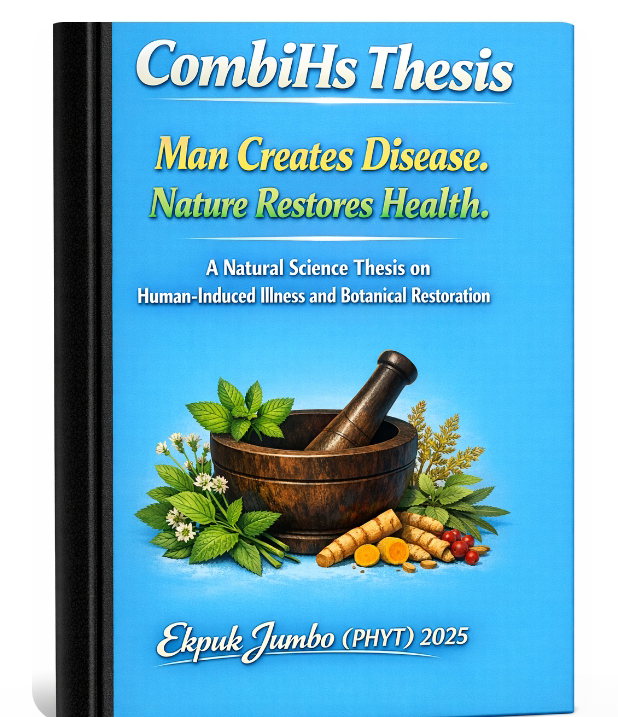
Food Energy Absence Illness frames disease as a consequence of removal rather than invasion. Many modern ailments do not emerge because something foreign enters the body, but because something essential disappears. When absence persists, the body adapts, compensates, and endures—until endurance becomes exhaustion.
Food is often described as fuel. This description remains incomplete. Fuel burns. Food communicates.
Every natural food carries biological instruction. This instruction guides digestion, absorption, distribution, storage, repair, and elimination. Traditional medical systems referred to this guidance as vitality or life force. Modern physiology recognizes the same function through enzymes, minerals, fiber structures, and phytonutrients.
When food is whole, it arrives with guidance.
When food is refined, the guidance disappears.
Calories provide energy, but nutrients provide direction. Without direction, energy destabilizes systems instead of strengthening them. Illness often develops not from lack of power, but from loss of instruction.
The term energy suffers misuse and misunderstanding. In this thesis, energy does not represent mysticism. It describes measurable biological capacity.
Energy includes:
Food contributes energy through efficiency, not excess.
A body filled with calories but lacking minerals grows exhausted.
A body supplied with minerals but overwhelmed by stimulation becomes inflamed.
True nourishment balances stimulation with structural support.
Refinement removes complexity. Traditional diets relied on foods consumed in complete form—fiber intact, minerals present, enzymes active.
Modern processing preserves stimulation while removing regulation.
What remains includes rapid energy release and extended shelf life. What disappears includes digestive moderation and cellular communication.
Refined food excites the body but abandons it afterward.
This abandonment forces compensation. Compensation drains biological reserves.
Disease is often blamed on harmful presence. More frequently, it develops from persistent absence.
Common forms of absence include missing minerals, inadequate fiber, unstable natural fats, and depleted plant regulators.
The body survives absence, but it does not thrive within it.
People may consume abundant food yet experience weakness, fatigue, and degeneration. Quantity cannot replace sufficiency.
Energy requires structure to serve function. Without structure, energy overwhelms systems.
The body responds defensively by storing excess, increasing insulin output, activating inflammation, and stressing detoxification organs.
The body stores excess not because it is weak, but because it is cautious.
Over time, protective adaptation becomes pathology.
Hunger rarely represents a simple request for calories. More often, it signals unmet nutrient needs.
Cravings intensify when mineral reserves decline, blood sugar fluctuates, or digestion weakens.
Cravings are not indulgence; they are unmet requirements.
Modern diets mute hunger temporarily while deepening deficiency.
Fluids support circulation and detoxification. Excessive or poorly timed intake weakens digestion.
Hydration without minerals weakens rather than strengthens.
Context determines benefit.
Traditional systems described digestion as fire. Modern physiology identifies this fire as enzyme production, stomach acidity, bile flow, and gut movement.
Poor digestion mimics starvation at the cellular level.
Disease often arises from inability to use food, not from lack of food.
Nature delivers nourishment with rhythm. Modern eating habits ignore timing through late meals, constant snacking, and stimulation during rest.
Healing occurs when nourishment respects timing.
Each organ operates within limits. Chronic overload creates energy debt.
Organs do not fail suddenly; they fatigue quietly.
Disease names appear late in this process.
Calories measure quantity, not quality.
Life depends on sufficiency, not abundance.
Plants evolved alongside human physiology, concentrating minerals and regulatory compounds.
Herbs address absence before symptoms.
Explore traditional botanical knowledge at
Tropical Herbs NG.
Understanding absence reframes healing.
What was removed can be returned.
Restoration requires intelligent nourishment, digestive support, mineral replenishment, and inflammatory balance.
Herbal systems guide repair without force.
Illness often begins not with poison, but with absence.
Nature responds not with aggression, but with provision.
Ailments are created by abuse.
Healing is designed by nature.
Further reflections appear at
medium.com/@ekpukjumb.
Herbal Medicine, Nutritional Ecology, Natural Healing, Preventive Health, Traditional Nutrition.

Prince Adede Ekpuk Jumbo (PHYT)
